
Insights Enterprise resource planning
Non-contact volumetric measurement with NXPERT EON: a biodiesel plant case study
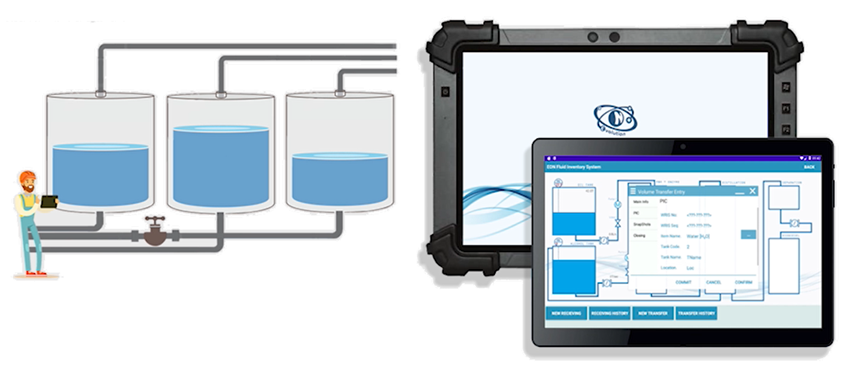
Measurement is a vital part of continuous improvement. After all, only processes that can be measured can be managed, and only processes that can be managed can be improved. But manual measurement is time-consuming and prone to error. Here is how we solved the problems of a biodiesel plant using the Internet of Things (IoT) and NXPERT EON, the SCADA software we developed.
As system developers in the IoT team, we use the latest technology to solve modern problems and improve processes. One example is using interconnected devices to automate the receiving of raw material deliveries at a biodiesel plant. The plant migrated from paper to automation using tablets and IoT, speeding up the receiving of raw materials and improving the accuracy of data — and correct data lets the company make the best decisions.
Because the plant’s main material is a flammable fluid, a careful study was made to create a system cut out for their needs, with environmental safety and the safety of the people working at the plant thoroughly considered. One hurdle was calculating the remaining volume of raw material — in this case methanol — in its storage tank. Methanol is a light, volatile, colourless, flammable liquid with a distinctive alcoholic odour. On the National Fire Protection Association’s fire diamond, methanol’s flammability (red) is rated 3: liquids and solids that can be ignited under almost all ambient temperature conditions. Its instability/reactivity (yellow) is 0: normally stable, even under fire exposure, and not reactive with water.
The flash point of a volatile material is the lowest temperature at which its vapours ignite if given an ignition source.


Since methanol is flammable, we limit contact with the fluid — especially for electronic devices. Even placing electronics on top of the tank without touching the liquid is dangerous because of methanol vapour at the top of the tank, should a short circuit or arc produce a spark.
According to the International Programme on Chemical Safety Guide No. 105, electronics used to maintain a methanol tank should be explosion-proof. Because stored methanol must not be subjected to air pressure, the Ingress Protection (IP) level was chosen carefully so the electronics are not exposed to vapour and no oxygen-bearing air enters the tank. IP ratings are defined in EN 60529 (BS EN 60529:1992, IEC 60529:1989). As an additional safety measure, an inert gas that doesn’t react with methanol balances the pressure inside and outside the tank.
After studying the problem, we found the answer in Mother Nature: echolocation. Bats and whales determine the proximity of an object using sound reflection.
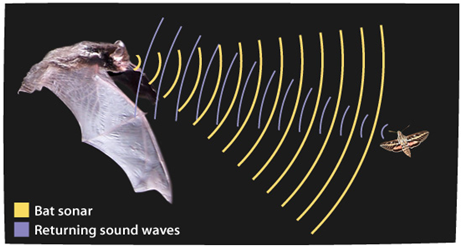
The faster transmitted sound returns to the receiver, the nearer the object it hit. To imitate this, we used an ultrasonic sensor, which transmits sound and receives its reflection. The denser the surface, the more sound is reflected.
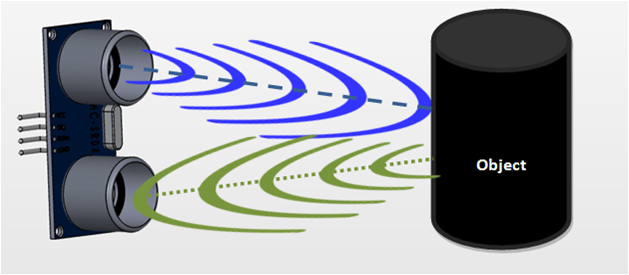
Sound cannot travel in a vacuum; in air it travels at about 355 m/s at 40°C. The sensor records how long the transmitted sound takes to return. Since distance = speed × time, and sound travels there and back, the computed distance is divided by two.
Say the sound returns after 750 μs: distance = 355 m/s × 750 μs = 0.26625 m. Dividing by two gives a one-way distance of 0.133125 m.
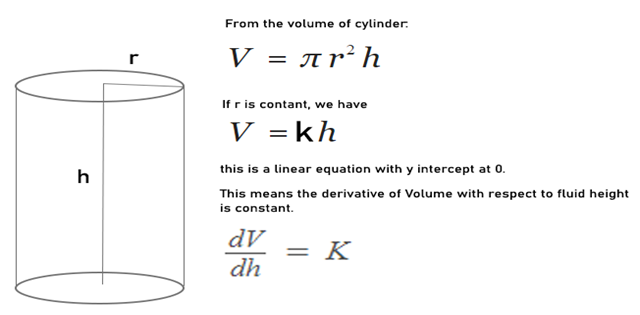
This reading determines the height of fluid inside the tank, and volume is computed as a function of fluid height. The derivative of volume with respect to fluid height is constant (dV/dh = k): increase the fluid height and the volume increases proportionally. With the sensor at the top of the tank facing the fluid surface, the closer the surface is to the sensor, the higher the fluid and the larger the volume.
A Programmable Logic Controller (PLC) reads the sensor data, transmitted over an RS-485 bus — capable of long-distance, multi-drop communication.
NXPERT EON reads the data from the PLC and presents it as numerical values and fluid height in the tank. Operators and engineers monitor tank status on tablets they can carry around the plant.
NXPERT EON uses IoT for communication among sensors and other devices, so the status of the plant can be checked remotely via the internet.
With this method, the biodiesel plant can read the volume of its tanks without contact with the flammable content — even though the fluid is colourless — avoiding hazards.